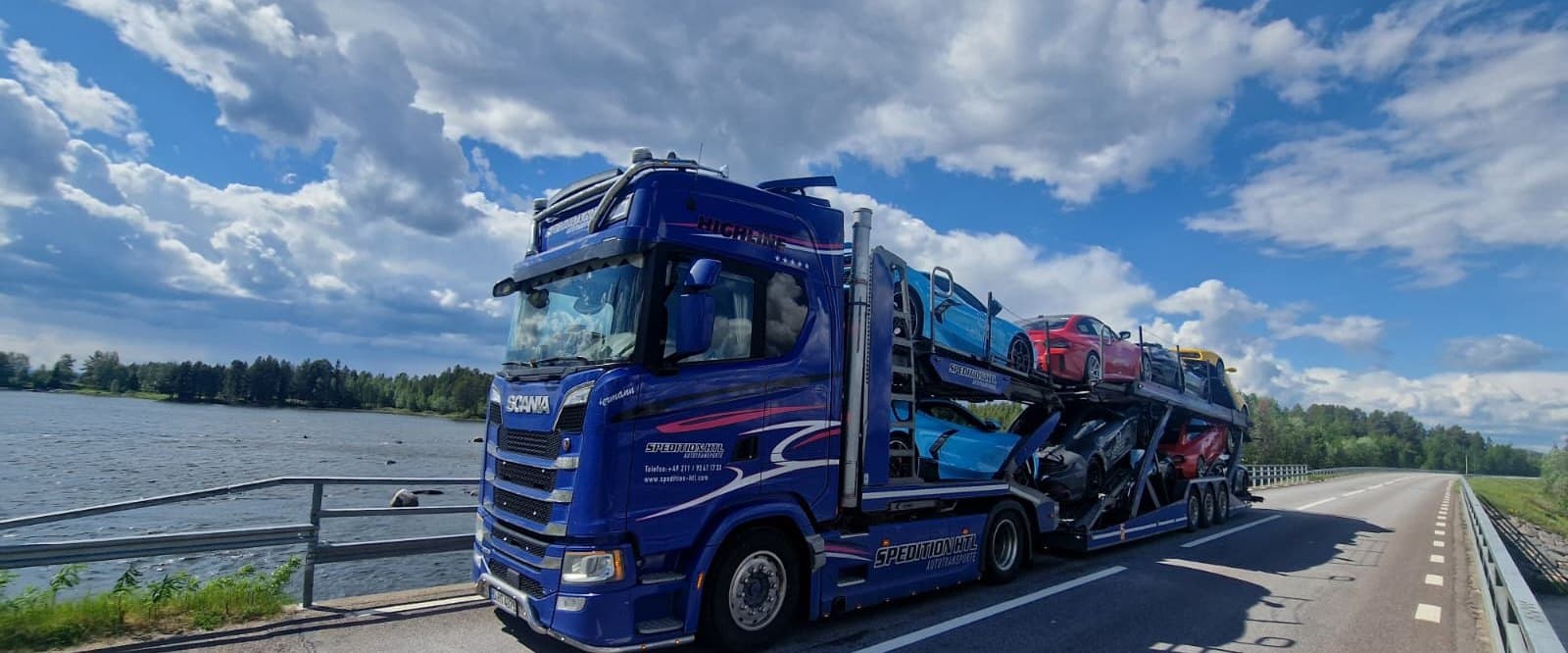
Driver shortage in Europe: why your carrier turns down loads
· 6 min read · Updated on
You have probably noticed that getting a batch of vehicles collected takes more lead time than it did two years ago. That is not an impression: according to the latest report from the IRU (International Road Transport Union), Europe has roughly 502,000 unfilled driver positions — a shortage rate of 13%. Here is what that figure means in practice when you move vehicles.
Half a million unfilled positions across Europe
The IRU finding is unambiguous: 502,000 driver positions remain unfilled in Europe, or 13% of the sector’s needs. Across the 18 markets studied worldwide, the figure is 2.9 million unfilled positions — 11% of the total workforce.
This is not a seasonal peak. It is a structural gap, several years in the making, affecting every segment of road haulage — including finished-vehicle transport, which additionally requires specific skills: handling a car-carrier combination, strapping, operating the hydraulic decks.
The age pyramid points to a worsening trend
Three figures sum up the trajectory: 20% of European drivers will retire within five years, one third are already over 55, and fewer than 5% are under 25.
In other words, intake does not cover departures. Even with sustained recruitment across the sector, the gap will widen before it narrows. For a shipper, that means today’s capacity constraint is not a rough patch to sit out — it is the new planning framework.
Two carriers out of three turn down contracts
This is the most direct consequence for you: 65% of carriers cite the shortage as their number one concern, and two out of three say they turn down contracts for lack of available drivers.
So when a collection is confirmed more slowly than before, or a secondary route cannot be served on your preferred date, the cause is rarely commercial: it is driver availability. A serious carrier will give you a realistic date rather than commit to one it cannot keep.
It also explains the widening gap between a price quoted on a platform and a date actually met. The price is easy to find; the truck and the driver are what is scarce.
ETS2: the move to 2028 is confirmed
A second signal for your budgets: ETS2, the emissions trading scheme that will cover road transport fuels. The reference timeline was a 2027 start; the postponement to 2028 was voted by the Council of the European Union on 5 November 2025. It is no longer a hypothesis — the deadline is set.
The working figure is an extra 13 to 15 cents per litre of diesel. With fuel accounting for about 30% of road transport costs, the effect on rates will be real without being brutal — in the order of 2 to 3% of a transport price, at constant consumption.
So it is a one-year reprieve, not a cancellation. A multi-year flow negotiated today should price the 2028 deadline in — and on the right basis, not on the high estimates that circulated before the vote.
What to look for in a carrier in 2026
No carrier escapes the shortage — we do not either. The difference lies elsewhere: knowing what you can actually commit to. A carrier that employs its drivers and runs its own car carriers knows its capacity to the day and can give you a date it will keep. A middleman reselling a service depends on capacity it does not control.
Three questions are worth asking before awarding a regular flow: who employs the driver who will move my vehicles? what real lead time is the collection committed to? who answers if the date moves?
Spedition HTL has run its own car carriers with its own drivers since 2014, and sends the rest of the planning — 47 trucks depending on demand — out with certified partners; HTL remains the contractual carrier and is liable under CMR for every consignment, including those a partner drives. We quote an average of 3 to 4 days between quote confirmation and loading, then 1 to 2 working days in transit on our usual corridors — observed figures, not sales figures.