EU cabotage rules: what transport buyers should know
· 5 min read · Updated on Regulation
A German truck running domestic deliveries inside France is performing cabotage — a practice strictly framed by Regulation (EC) No 1072/2009. Less known: depending on national law, a shipper who knowingly orders a non-compliant transport can also be held liable. Here are the rules, explained simply. Have specific cases reviewed by your counsel.
What is cabotage?
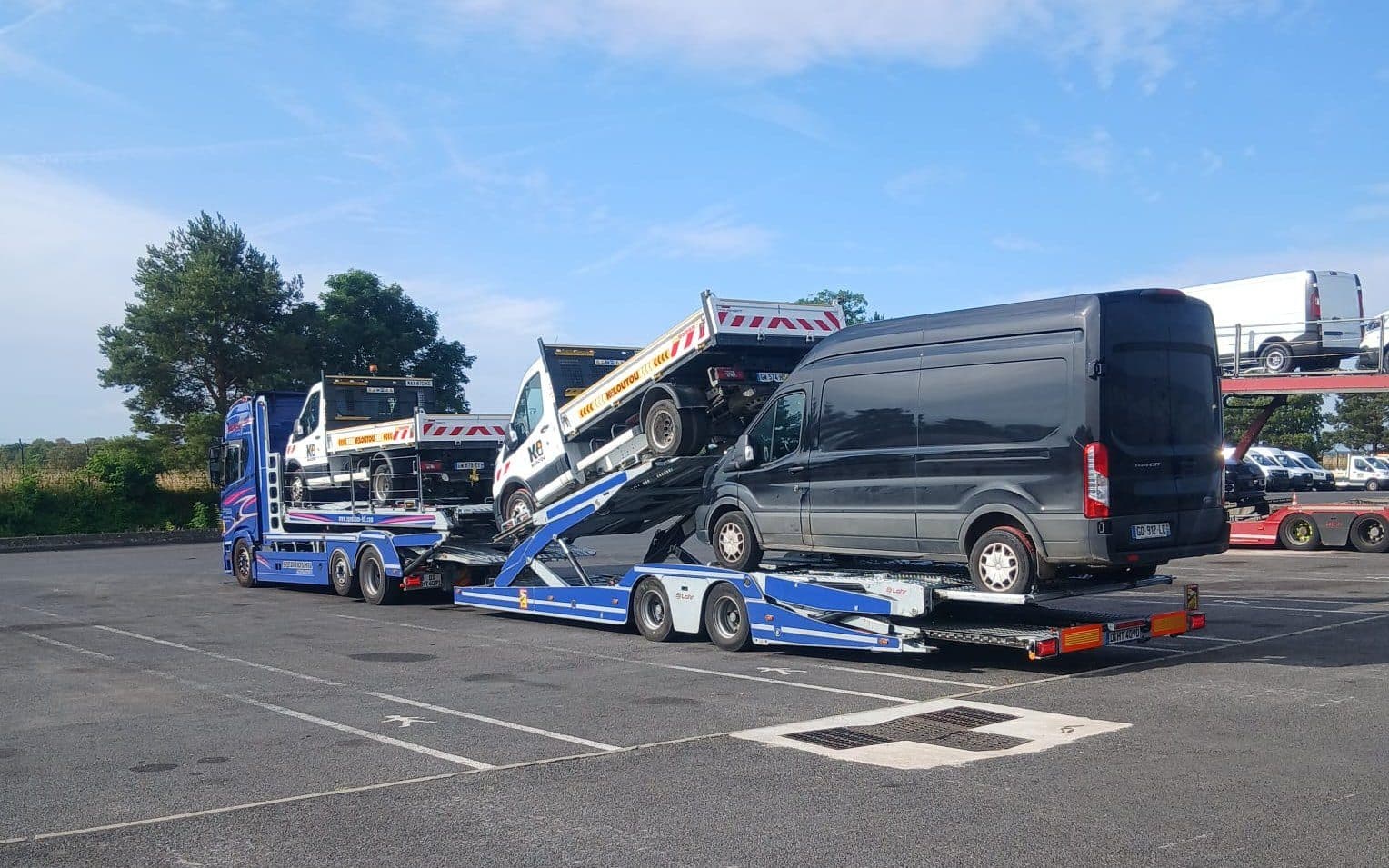
It is a domestic transport performed by a non-resident carrier: a car carrier registered in Germany loading in Lyon and delivering in Paris is performing cabotage in France.
Cabotage is legal — but only within the limits of Regulation (EC) No 1072/2009, designed to prevent foreign carriers from operating continuously on a national market.
The rule: 3 operations in 7 days
After delivering an incoming international transport, a carrier may perform at most 3 cabotage operations within 7 consecutive days in the country of delivery. Then it must exit (new international transport or return).
The counter is per country: three operations in France open no rights in Belgium. And the sequence is strict — no new international load before the current cabotage is completed.
Why it also concerns the transport buyer
In several EU countries, the shipper’s liability can be engaged for knowingly ordering non-compliant transport. Roadside checks verify proof of the incoming international transport and the operations history.
A simple question for your carrier: “How do you track your cabotage counters?” A professional must be able to answer precisely.
What a carrier really risks: the BALM case
Until now, a cabotage breach ended in a fine. The BALM, Germany’s federal road haulage authority, has just shown the sanction can go much further: in August 2026 it imposed a one-year national cabotage ban (1 October 2026 to 30 September 2027) on a Polish carrier, under Article 13(2) of Regulation (EC) 1072/2009 and the German cabotage ordinance.
The reasoning matters: the exclusion was not triggered by a single breach but by repetition — 23 completed sanction proceedings and over €70,000 in fines between 2023 and 2025, with no deterrent effect. The decision is not yet final; an appeal remains open.
For a transport buyer the lesson is direct: a carrier banned from German cabotage can no longer handle the domestic legs of your inbound flows. That is no longer an abstract legal risk, it is a service continuity risk.
How Spedition HTL manages cabotage
Every truck in our fleet has an individually tracked cabotage counter in our dispatch system. Before accepting a domestic load, the sequence is checked — and if the counter is full, the load is refused, no exceptions.
That is what separates a contractual carrier from a broker: the sequence is checked before loading and documented — precisely what a subcontracting chain keeps opaque.
Go further on this corridor:
See our car transport in Europe page →