Truck tolls 2026: Maut, LSVA III and KmToll explained
· 6 min read · Updated on Regulation
Tolls are a real share of vehicle transport costs — and the landscape is moving fast: CO₂-differentiated German Maut, Swiss LSVA III since January 2026, Danish GNSS KmToll since January 2025. Here is what a transport buyer needs to understand, without jargon. Exact rates evolve: refer to the official sources cited.
Germany: the Maut, tiered by CO₂ emission class
The Maut applies to trucks on German motorways and federal roads, collected automatically via on-board unit (OBU). Its tariff is tiered by CO₂ emission class: the newer and cleaner the truck, the less it pays (source: Toll Collect / BALM).
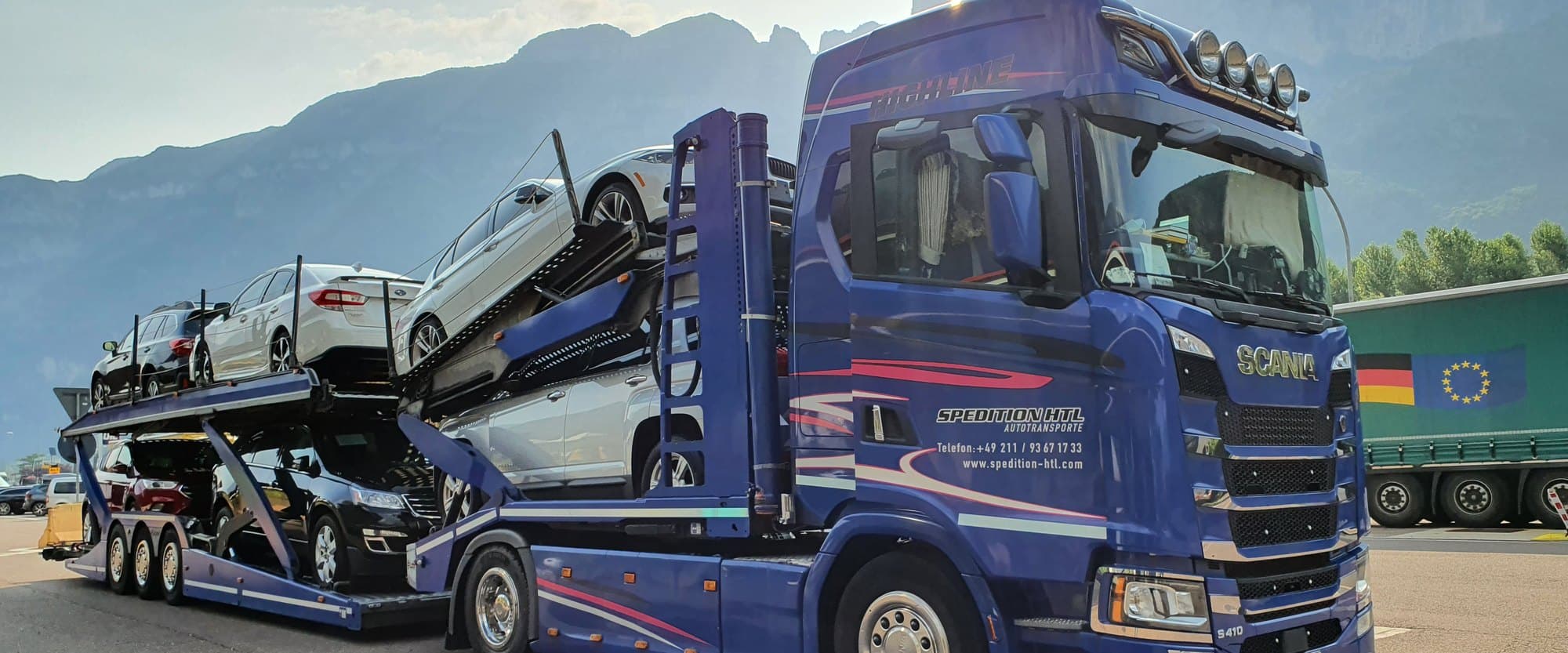
Order of magnitude: a modern Euro VI car carrier in CO₂ class 1 (5 axles) pays around €0.35/km. On Cologne–Munich, tolls add up to hundreds of euros — one more reason to favour well-filled trucks.
Switzerland: LSVA III since January 2026
The Swiss heavy-vehicle charge (LSVA) moved to version III on 1 January 2026: it is calculated on kilometres driven × weight × emissions factor, with mandatory vehicle registration before any transit (source: lsva.ch, federal administration).
An unregistered truck is stopped at the border. For buyers: Swiss transit has its own per-km cost, separate from EU tolls — check how your carrier bills it.
Denmark: GNSS KmToll since January 2025
Denmark replaced its vignettes with the KmToll, a distance-based toll using satellite positioning (GNSS), mandatory since January 2025. The digital ticket must be purchased before entering the country (official portal: betalt.dk, or via an EETS provider).
On our regular Denmark lines, this step is part of our drivers’ standard departure process.
What this means for your transport prices
At Spedition HTL, corridor tolls are included in the quote — no surprise surcharge at delivery. And our modern Euro VI fleet benefits from the favourable CO₂ classes of the Maut: controlled costs that show in our prices.
A useful question for any provider: “Do your prices include tolls, and is your fleet in a favourable CO₂ class?”