Used car export: Denmark → Western Europe
· 5 min read · Updated on
Denmark levies one of the highest vehicle registration taxes in Europe, which keeps its used-car market active and feeds a steady export flow to Germany, France and Western Europe. For traders and importers, this Northern European corridor calls for solid organisation. Here are the essentials, from a B2B vehicle transport specialist since 2014.
Why an export flow from Denmark?
With a registration tax among the highest in Europe, the Danish used-car market is particularly active. Professionals find attractive vehicles there to re-export to Germany, France and the rest of Western Europe.
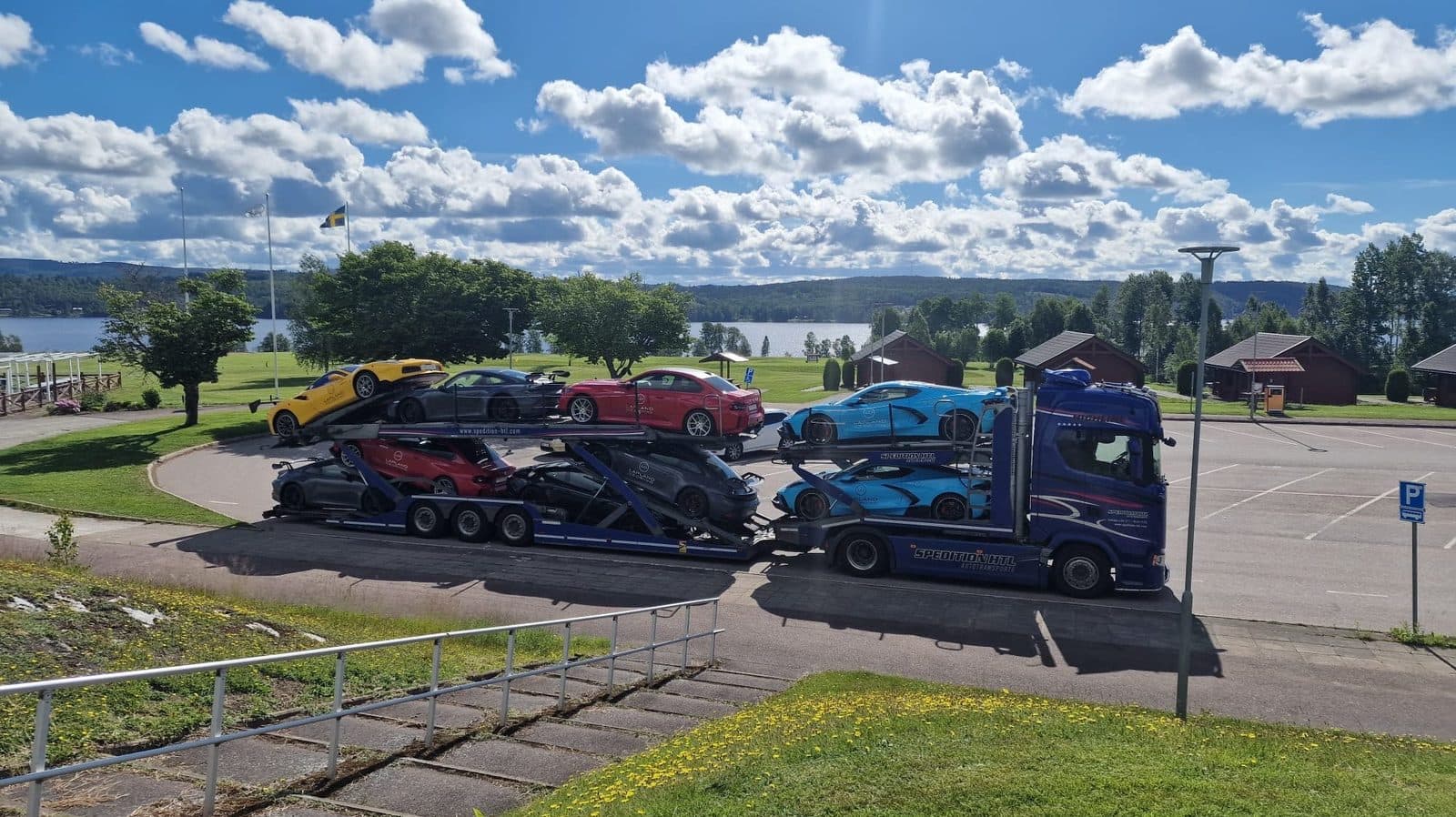
Based in Düsseldorf, at the crossroads of the major axes, we run this corridor with five car carriers of our own and certified partners, on an open car carrier. Enclosed transport goes to specialised partners on request.
The Denmark → Germany and France corridor
From Jutland or Copenhagen to the Rhineland, plan for generally 1 to 3 business days; to France, allow 3 to 5 business days depending on loading points and truck fill rate.
The route runs through the Danish peninsula and then Germany (Hamburg axis). We are happy to group several vehicles on one truck to optimise the per-unit export cost.
Documents and formalities
As Denmark, Germany and France are in the European Union, there are no customs formalities. Prepare the registration certificate, a proof of ownership/invoice and the contacts for pick-up and delivery.
A CMR and a condition report are drawn up at pick-up and signed on delivery; they are decisive in case of dispute.
Organisation and tracking with HTL
You get a tracking link for your shipment, no account or password needed, showing your vehicles within an approach zone of about 10 km through to delivery. Your goods are covered by the CMR liability — and for high-value vehicles we optionally offer ad valorem insurance up to €250,000 per vehicle.
Used-car traders, importers, auction platforms: we adapt the setup to one-off lots as well as regular volumes on the Danish axis.