Electric car transport in Europe: the B2B guide
· 5 min read · Updated on
Electric vehicles now account for almost one in five new cars in Europe, and their share is rising fast. For dealers, rental companies and platforms that need to move these vehicles, a few specifics add to standard transport. Here are the essentials, from a B2B vehicle transport specialist since 2014.
Transporting an electric vehicle: what’s different?
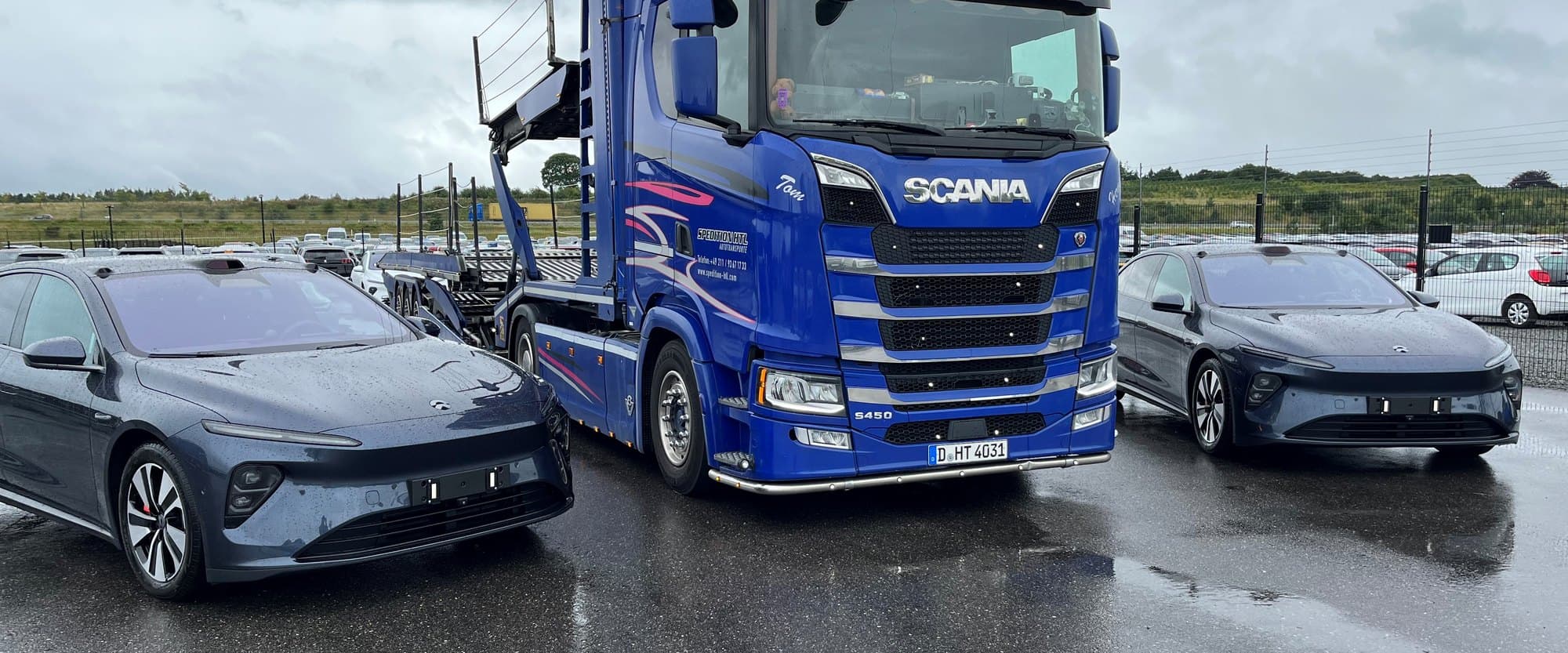
An electric vehicle is transported like any other car on our open car carriers. We move EVs regularly, alongside combustion and hybrid models, across all our European corridors.
The main differences concern preparation (state of charge, transport mode) and handling at loading, as an EV is quieter and often heavier. Our drivers are used to it.
State of charge and preparation before pick-up
For a smooth transport, we recommend a state of charge of around 50% at pick-up: enough for loading and delivery manoeuvres, without immobilising a full battery. Avoid a completely empty battery.
Activate the transport mode or neutral depending on the manufacturer, disable alarms and anti-theft systems that lock the wheels, and leave the card or key available for collection.
Safety, insurance and documents
As with any transport, a CMR (consignment note) and a condition report with photos are drawn up at pick-up and signed on delivery. Your vehicle is covered by our transport insurance up to €250,000 per vehicle.
Our teams apply the handling best practices specific to electric vehicles and comply with statutory driving hours across Europe.
Why entrust your EVs to the contractual carrier rather than a broker
We run five car carriers of our own and dispatch 47 trucks with certified partners. You know who drives your vehicle, and you receive a tracking link for your shipment, with no account and no password, showing it within a zone of about 10 km.
Dealers, rental and leasing companies and auction platforms: we transport your electric vehicles individually or grouped together, on one-off or regular flows.
Go further on this corridor:
See our car transport in Europe page →