Grouping shipments to the Netherlands: what it changes for transit
· 5 min read · Updated on
Germany and the Netherlands form one of Europe’s busiest vehicle corridors: a dynamic used-car market, Dutch import ports and constant flows between dealers. Based in Düsseldorf, close to the border, we run this axis daily. Here are the essentials.
A short corridor between the Rhineland and the Randstad
From Düsseldorf or Cologne to Amsterdam, Rotterdam or Utrecht, expect 200 to 400 km depending on the exact points. It is one of our most direct axes, with no transhipment in most cases.
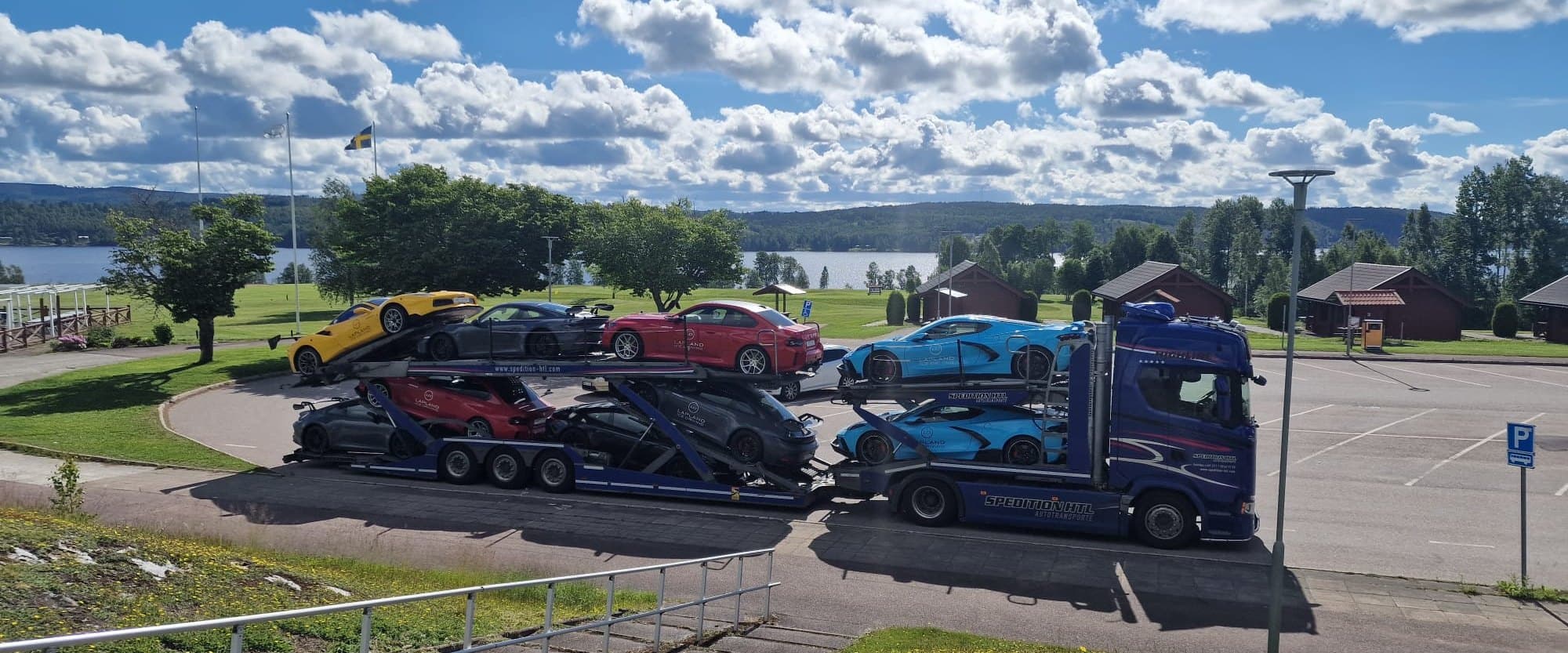
Transport on an open car carrier, with our five trucks and certified partners. Enclosed transport is not run by our own fleet: we place it with specialised partners on request.
Delivery time Germany–Netherlands
On this short axis, transport often takes 1 to 3 business days, sometimes next-day depending on availability and the pick-up window.
Geographic proximity allows high responsiveness, useful for dealers and rental companies that need to deliver fast.
Price: what matters on this corridor
As the distance is short, the rate depends mainly on the number of vehicles, the service type (door-to-door or hub) and the load density. Grouping several vehicles on the same truck sharply reduces unit cost.
Tolls are limited on this axis; fuel and route planning are included in the quote. For regular volumes, framework terms can be set up.
The lever the headcount alone doesn’t show: batching over time
Most requests on this corridor involve one or two vehicles, sent off as soon as they are ready to move. Yet each separate request triggers the same base cost — collection, condition check, delivery slot — whether one vehicle travels or several: on a corridor this short, what weighs on the price is not the distance but the number of trips billed.
If several vehicles in your fleet become available a few days apart — end-of-lease returns, dealer trade-ins, compound releases — flag that expected volume at the first enquiry rather than sending one request per vehicle. On a corridor as busy as Germany–Netherlands, that is often enough to put them on a single trip and bring the price per vehicle down. Request a quote as soon as you have an estimate of your availability: the pricing accounts for the grouping automatically.
Required documents
Germany and the Netherlands are in the EU, so no customs. Prepare the registration certificate, an invoice/proof of ownership for trade vehicles, and the contacts for pick-up and delivery.
A CMR and a condition report are drawn up at pick-up and signed on delivery.
Go further on this corridor:
See our Germany → Netherlands corridor page →