CMR consignment note: what every client should check
· 5 min read · Updated on Regulation
Every international road transport in Europe relies on one document: the CMR consignment note, based on the 1956 Geneva Convention. In a dispute, what is written there prevails. Here is what a transport buyer — dealer, rental or trading company — should check before signing, and how quickly to react after delivery. This is general information: have specific cases reviewed by your legal counsel.
What exactly is the CMR?
The CMR Convention (Geneva, 1956) governs international road carriage of goods between signatory countries — including the entire EU. The consignment note documents the contract: sender, carrier, consignee, the goods and their condition at collection.
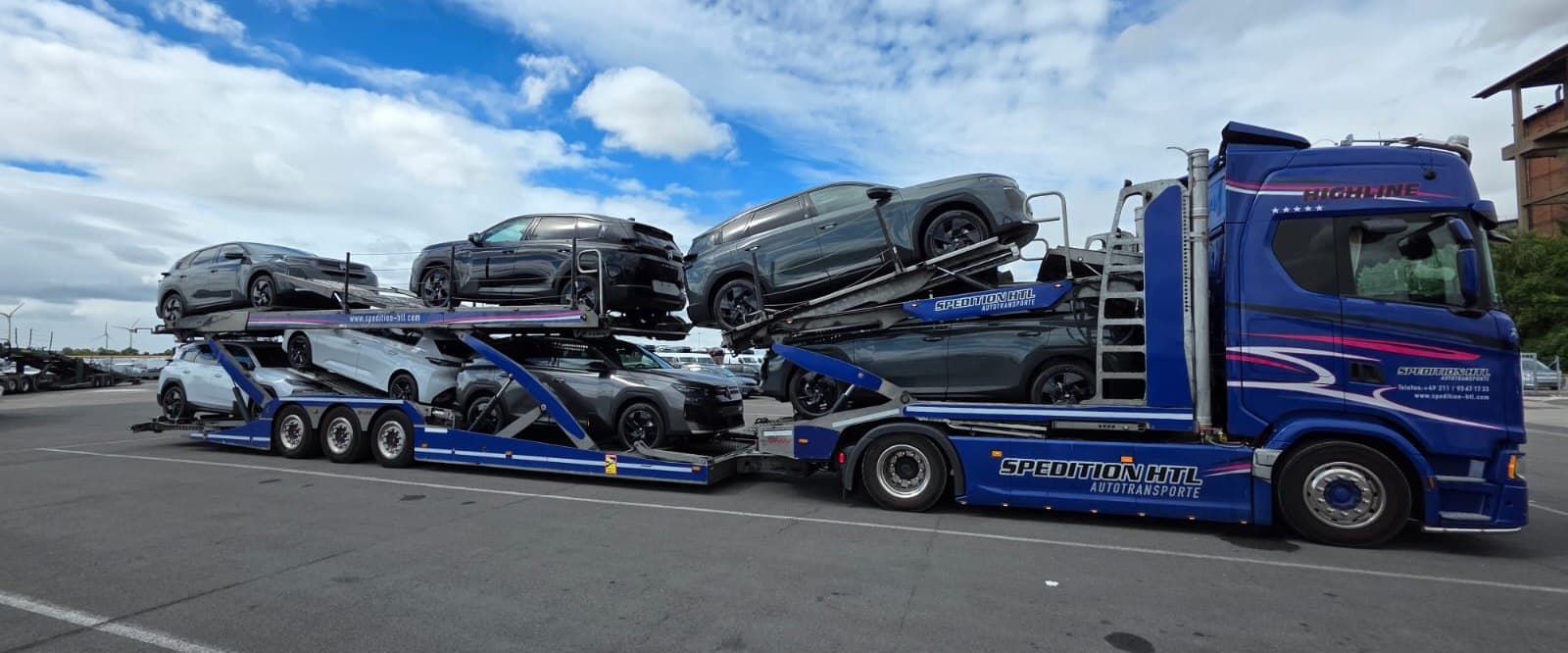
It travels with the vehicle and is signed twice: at collection and at delivery. At Spedition HTL, every collection includes a condition report with damage diagrams and photos.
What the CMR proves — and what it does not
Without a reservation noted at collection, the goods are presumed received in good condition. That is why the loading condition report is decisive: existing scratches or damage must be recorded in writing.
Conversely, a CMR signed without reservation at delivery makes later claims difficult. The golden rule for consignees: inspect the vehicle BEFORE signing.
Reservations: the deadlines to know
For apparent damage, reservations must be made at delivery, directly on the CMR. For non-apparent damage, the Convention (art. 30) allows 7 days for written notice.
A useful reservation is precise: location and nature of the damage, with a photo. A generic “subject to inspection” is usually not enough.
Compensation: the CMR limit and why insurance matters
The Convention caps the carrier’s liability at 8.33 SDR per kilo (art. 23). The good news: in almost all cases this limit is more than enough — typical transport damage is minor (rim, mirror, paint chip) and a repair never costs the price of the vehicle.
The limit only becomes a real topic in two situations: a high-value vehicle (for example above €100,000), or a client who wants full coverage no matter what. For those cases, Spedition HTL offers ad valorem insurance: the vehicle is then insured at its declared value, up to €250,000, independently of the weight-based calculation. Just ask for it when requesting your quote.